© Jeremy D’Entremont
A Foundation for the Next Chapter
A clearer partnership. A practical path to construction.
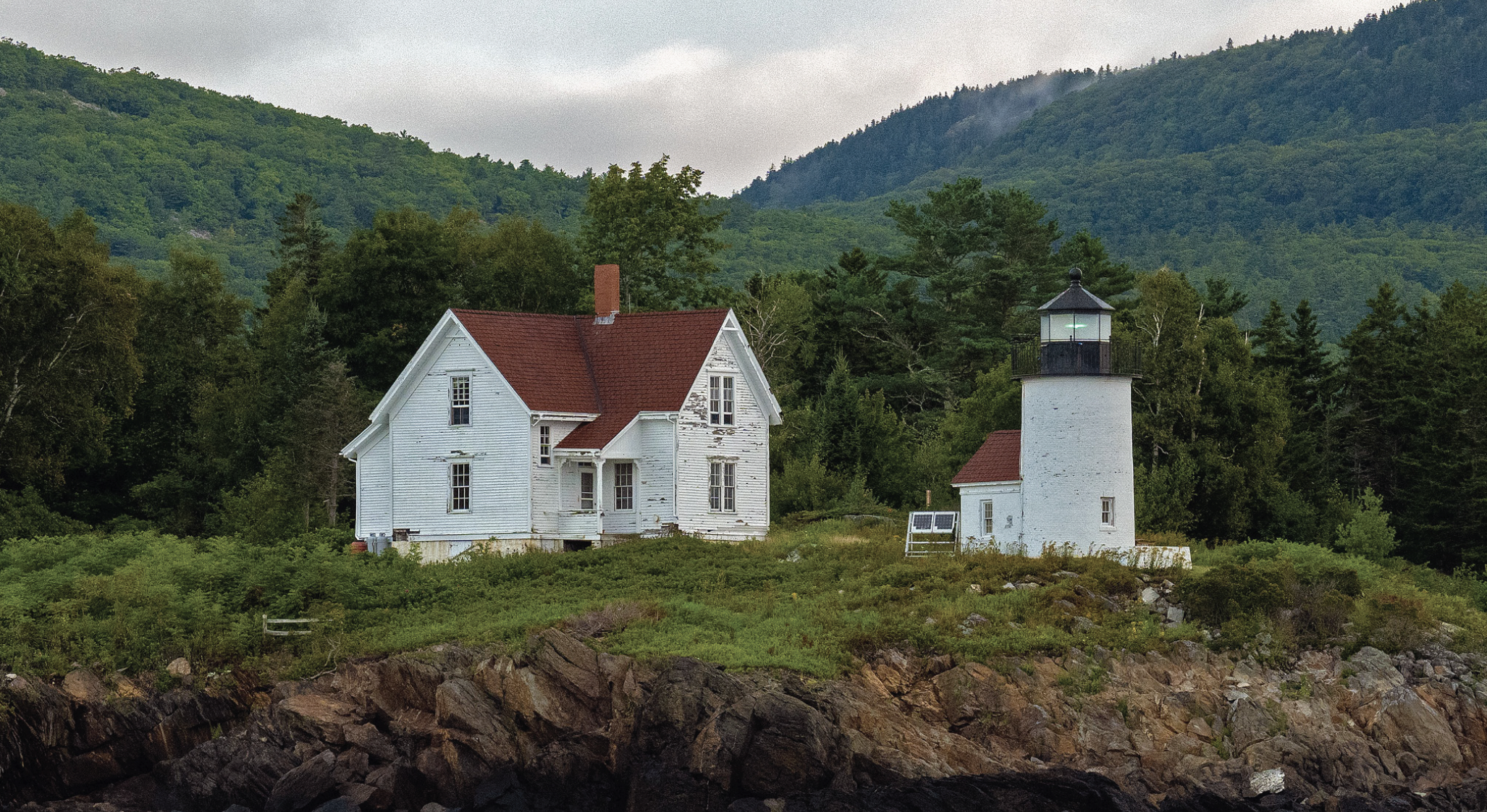
A year of important work has brought Curtis Island closer to the restoration it deserves. While much of our work may not have been publicly visible, the project was far from standing still. CILF and the Town of Camden strengthened their partnership, advanced key projects, pursued significant grant support, and continued caring for the Light Station’s historic buildings and artifacts.
A new agreement for island access
On October 20, 2026, the Camden Select Board approved a new Memorandum of Agreement between the Town of Camden and CILF. The agreement establishes a clear framework for replacing the public access stairs at Curtis Island.
An important milestone was reached recently when the Town issued bid documents for engineering, design, permitting, fabrication, and installation of the new stairs. Contractors are already expressing interest. CILF has committed up to $75,000 toward project costs, supported by a $25,000 grant from Maine Lighthouse Trust and $50,000 in donor contributions.
With the agreement in place and bidding underway, the foundation has been laid for a productive 2027 building season.
A major step toward Light Tower restoration
In October, the Town of Camden, with support from CILF and Historic Building Architects, submitted a $404,000 grant application to the Maine Historic Preservation Commission for initial Light Tower restoration. The total includes $101,000 match from CILF. If awarded, the grant will fund restoration of the exterior metalwork, brick masonry, and wood elements.
© Pat Skaling
© Sherri Roberts
Columbia University Students Explore Preservation
and Coastal Resilience at Curtis Island
A field visit connects historic lighthouse preservation with the future of Maine’s coast.
“Visits like this help connect the study of historic preservation with the larger questions facing Maine’s coast,”
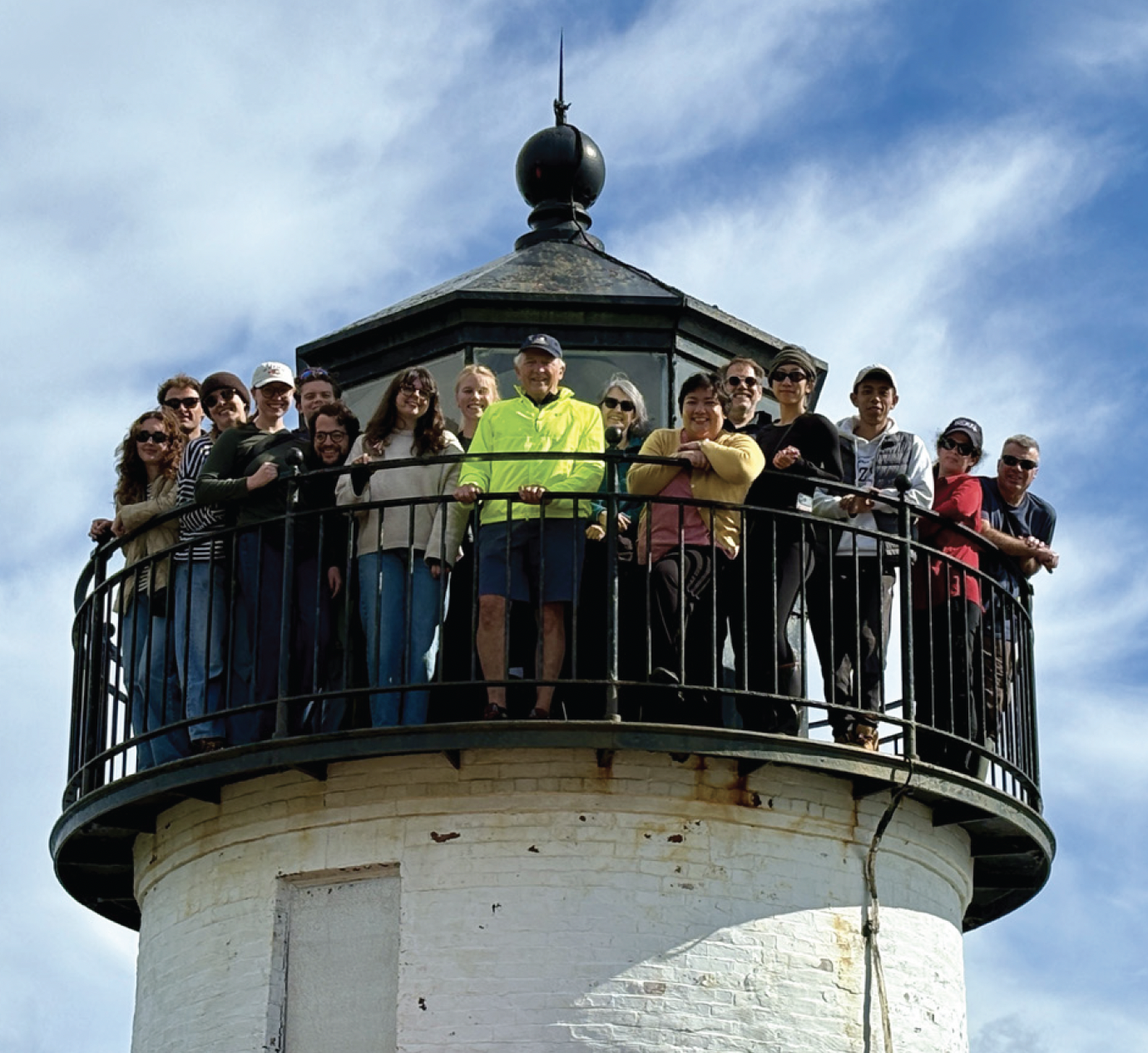
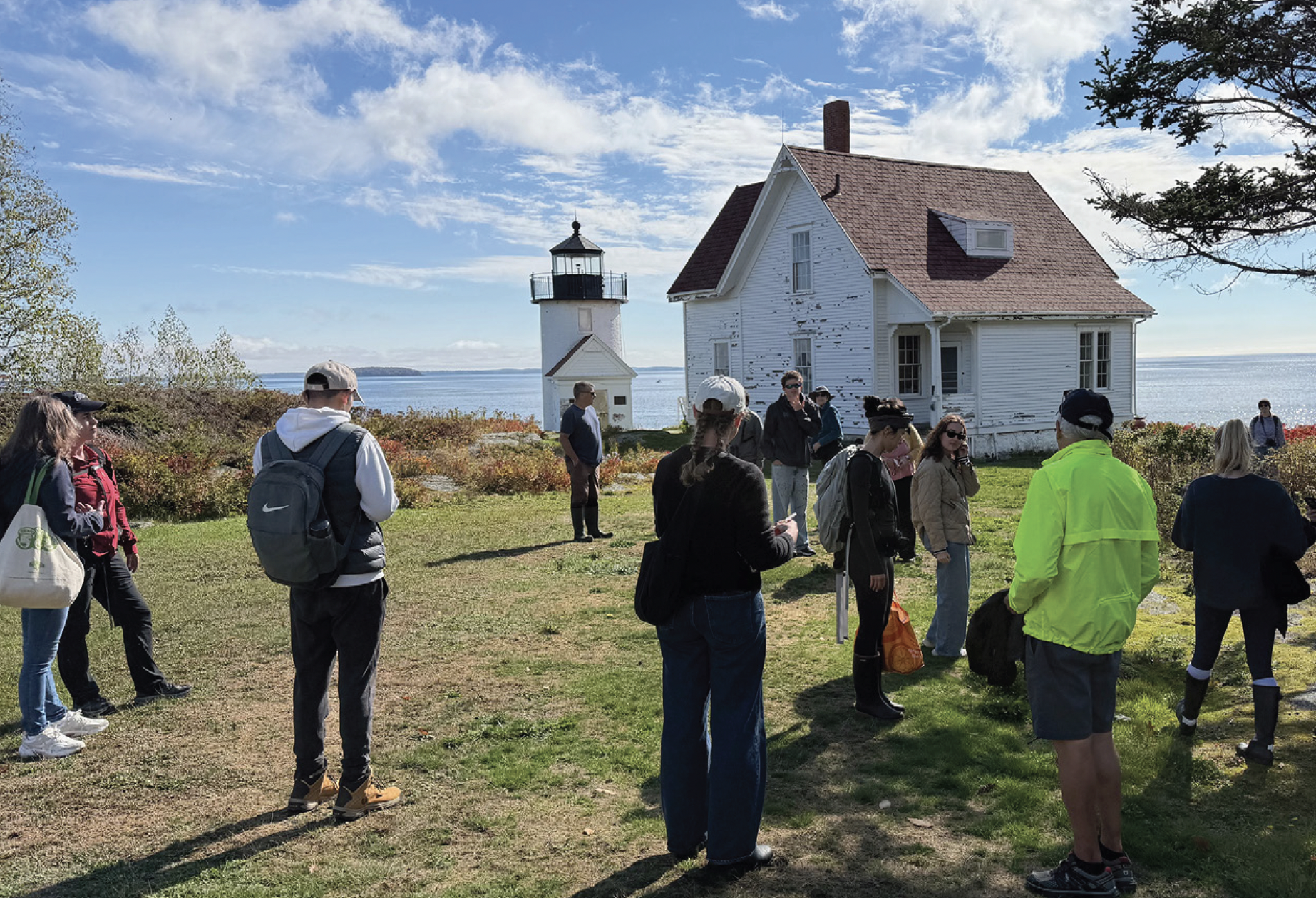
On October 14, Curtis Island Light Station became an outdoor classroom for thirteen graduate students and faculty associated with Columbia University. Their visit brought academic study into direct contact with one of Camden’s familiar maritime landmarks—and with the practical challenges of caring for a historic property on a small coastal island.
The visit was part of Columbia’s Fall 2026 advanced studio, “Heritage on the Front Lines: Lighthouses as Drivers of Coastal Adaptation and Community Resilience,” led by Professor Erica Avrami. The studio brings together graduate students in historic preservation and urban planning to examine how lighthouses might contribute to community planning as Maine’s coast faces environmental change.
The students’ work looks beyond individual buildings. It considers how history, community connections, public access, land use, ownership, coastal infrastructure, and climate risks can inform decisions about the future of coastal places. During fieldwork in Maine from October 12 through 17, students studied lighthouse sites as part
of a wider network and will develop research and recommendations intended to help communities consider their role in coastal adaptation and resilience.
At Curtis Island, the questions were tangible. Students could see the Light Tower and Light Keeper’s House in their island setting and learn about the work required to preserve historic buildings exposed to a demanding coastal climate. They also heard from people involved in the ongoing effort to care for the site. The visit linked classroom research with the experience of local residents and volunteers who value the island’s history and its continuing place in Camden’s public life.
“Visits like this help connect the study of historic preservation with the larger questions facing Maine’s coast,” said Michael Skaling, president of the Curtis Island Lighthouse Foundation. “Curtis Island is a historic place, but it is also part of a living coastal community. We welcome opportunities for students and researchers to learn from the site and to consider how preserving places like this can contribute to the future of our coast.”
The visit was coordinated with help from Bob and Ann Trapani of the American Lighthouse Foundation, Michael and Pat Skaling of the Curtis Island Lighthouse Foundation, and Chris Friden of the Camden Historic Resources Committee. Camden Harbor Master Steve Pixley provided transportation to the island.
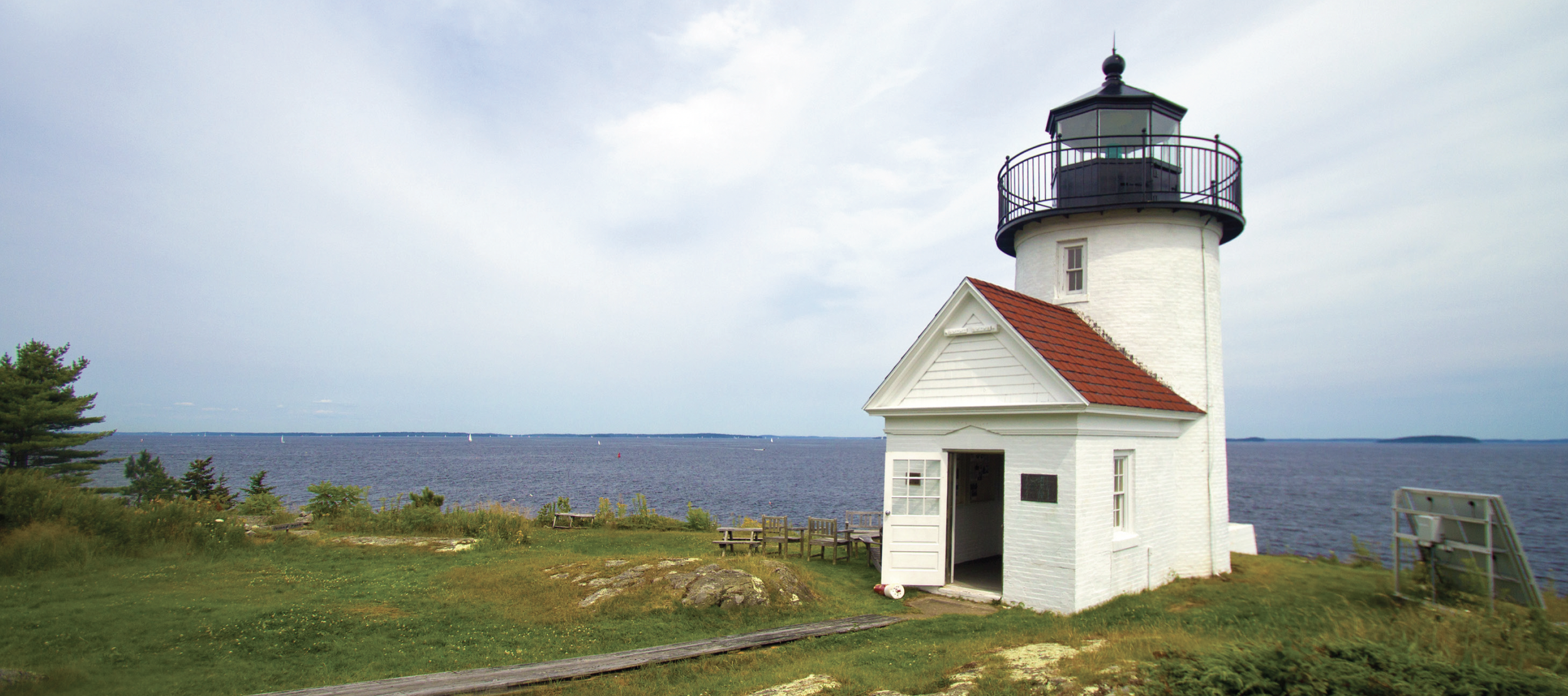
Founded in 2023, the Curtis Island Lighthouse Foundation raises funds and supports preservation of the Light Station’s four historic buildings: the Light Tower, Light Keeper’s House, barn, and oil shed. The Foundation also works to strengthen public understanding of the island’s history and the importance of protecting this part of Camden’s maritime heritage.
Columbia’s studio is being conducted alongside a related studio at the University of Pennsylvania, which focuses on individual sites, landscapes, and communities. Both are part of a collaboration with World Monuments Fund and the American Lighthouse Foundation. Together, this work offers an opportunity to consider how historic lighthouses can remain meaningful community places while contributing knowledge to the larger discussion about the resilience of Maine’s coast.
Preserving History, Building Connections
The work is more than construction.
© Jeremy D’Entremont
© Michael Skaling
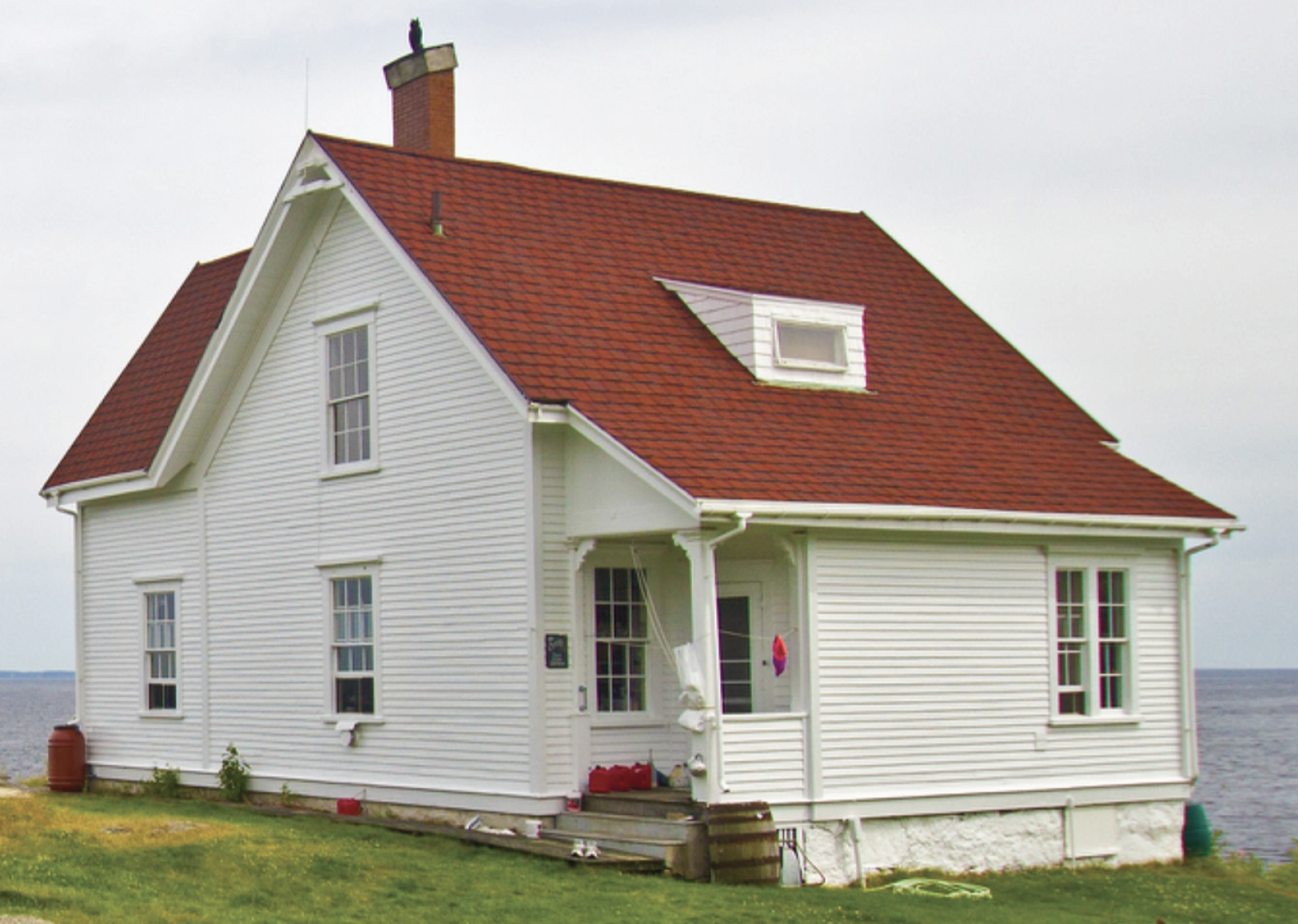
The Light Keeper’s House: Our $400,000 priority
The Light Keeper’s House is an essential part of Curtis Island’s historic Light Station, and its exterior needs substantial restoration. CILF’s goal is to assemble approximately $400,000 in available funds before the project goes out to bid. CILF has applied to the Maine Lighthouse Trust for a new $50,000 grant to support this effort and previously received a $25,000 Maine Lighthouse Trust grant for building materials. Together with donations already received, these resources bring us closer—but we estimate that approximately $300,000 more must be raised.
The sequence is important: under the Town’s approach, the restoration will not proceed to construction bidding until the required funding is in the bank. Reaching the $400,000 goal will therefore be the decisive step that allows the Town to begin the bidding process. We are asking you to help close this funding gap so that the Light Keeper’s House restoration may begin in Summer, 2027.
The Fog Bell comes home!
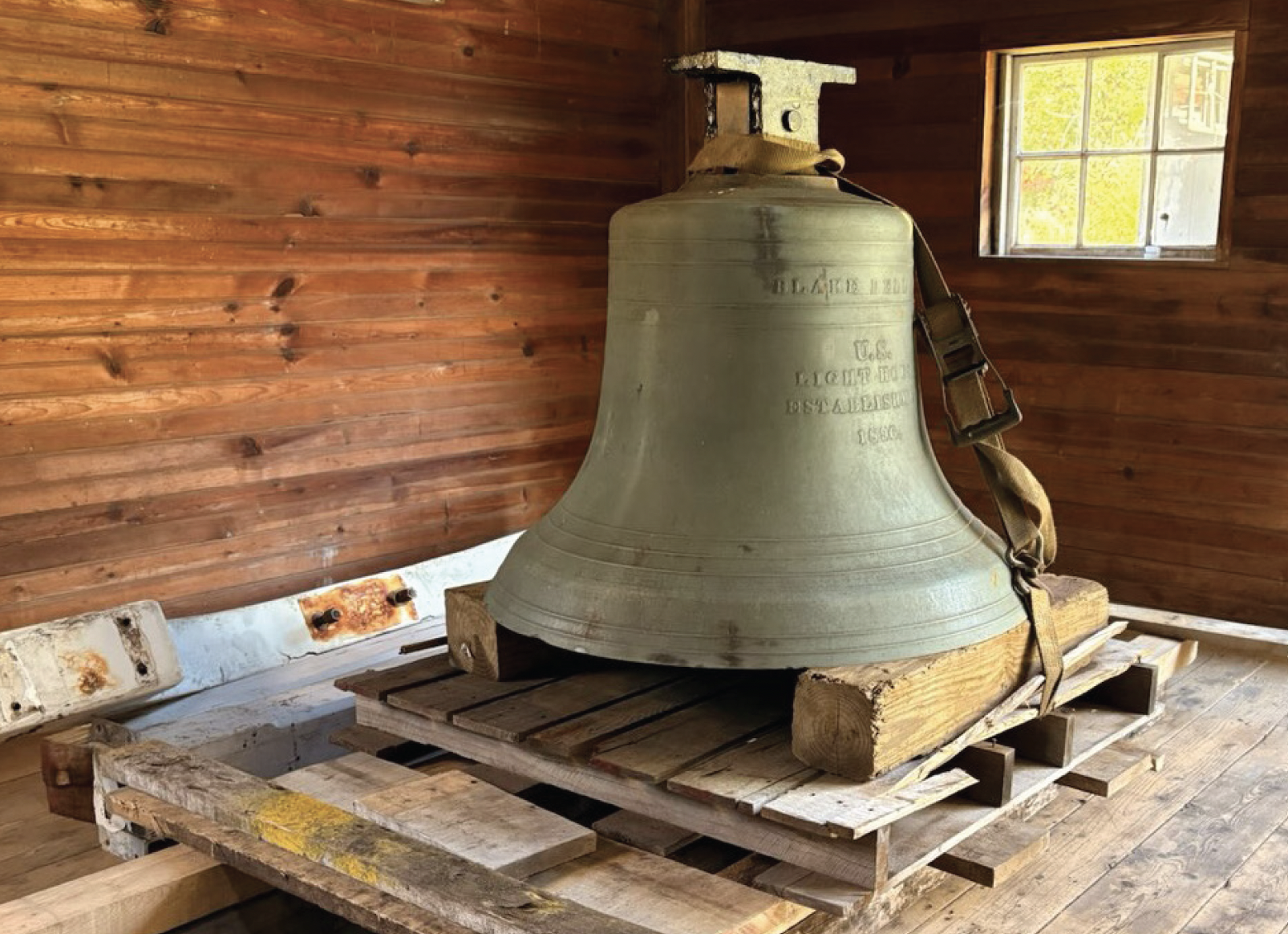
The original Curtis Island Fog Bell—all 1,000 pounds of it—has returned to the Curtis Island Lighthouse Foundation. The Deer Isle-Stonington Historical Society voted to return the bell to the place where its story began, transferring it to CILF on May 1, 2026. Installed on Curtis Island in 1896 and decommissioned in 1973, it is an important part of the Light Station’s maritime history.
The bell also tells a story of American ingenuity. Made by Boston’s Blake Bell Company, it traces its roots to William Blake, who partnered with Paul Revere’s grandson, Paul Revere III. At a time when many bells were imported from England, American foundries helped establish bell-making as a homegrown industry.
The bell was retrieved with generous help from Viking Lumber, which provided a boom truck to lift and secure it, and Rockport Steel, which helped transport it and restore it. Now safely stored in a donor’s barn, the bell awaits the recreation of its original gallows-style support—the structure from which it once rang over Curtis Island.
© Jeremy D’Entremont
A Lighthouse That Belongs To Everyone
Public access, careful stewardship, and your support.
Maine Open Lighthouse Day
CILF made Curtis Island accessible for Maine Open Lighthouse Day in September. Sam and Barney Appleton generously piloted their landing craft to transport
visitors to the island. Approximately 30 visitors arrived through organized transportation and more than 20 arrived independently by kayak. Visitors had oppor-tunities to explore all four historic buildings and take part in an educational program about invasive plants and island stewardship.
Responsible stewardship behind the scenes
At its recent meeting, the CILF Board refined and formalized important financial practices to support the Foundation’s responsibilities as it enters the next stage of restoration. Strong financial oversight, project-specific fundraising, and a commitment to having appropriate funds available before work proceeds remain central to CILF’s approach.
Help close the $300,000 gap
The Light Keeper’s House needs more than good intentions—it needs the money in place to begin restoration. CILF’s fundraising goal is approximately $400,000, combining the new $50,000 grant request to Maine Lighthouse Trust, the earlier $25,000 grant for building materials, and donor support already received. We estimate that about $300,000 remains to be raised for the house. Once the full funding is achieved, the Town will begin the bid process for the restoration.
Please make a generous year-end gift to help us reach this goal!
If you are age 70½ or older and have an IRA, you may also be able to support CILF through a Qualified Charitable Distribution (QCD)—a direct transfer from your IRA to an eligible charity. A QCD may offer tax advantages and can be a meaningful way to help preserve Curtis Island. Please consult your IRA custodian or tax adviser to determine whether a QCD is appropriate for you.
Help Us Restore the Light Keeper’s House!
Donate today to save the Light Keeper’s House and rebuild island access.
Please consider us for your end-of-year required minimum retirement distribution!